

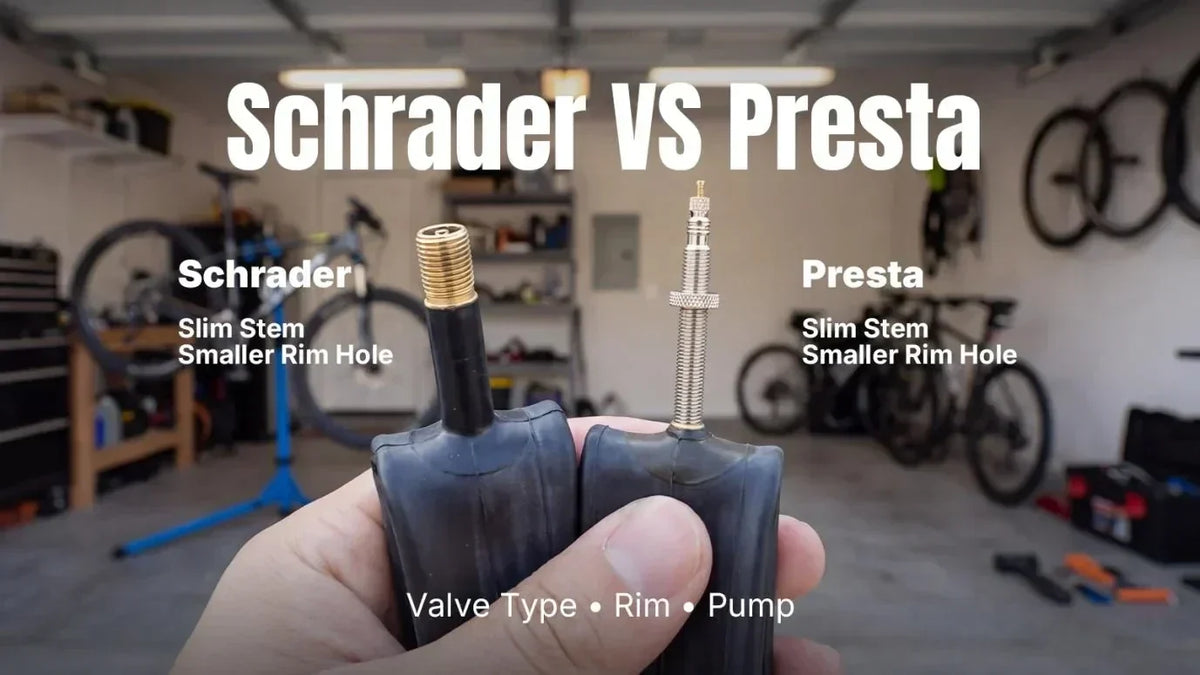
A Presta valve is slim and has a small threaded tip, while a Schrader valve is wider and uses a spring-loaded center pin. Check your rim hole first, then choose a tube with the correct valve type and sufficient valve length for your rim.
Tube size still matters. A suitable replacement needs the right tire diameter, width range, valve type, and valve length.
Presta vs. Schrader: How to Identify Each Valve

You can identify a Presta valve from its narrow metal stem and small nut at the top. A Schrader valve has a wider stem with a visible center pin.
| Feature | Presta Valve | Schrader Valve |
|---|---|---|
| Stem Shape | Slim metal stem | Wider metal stem |
| Opening Method | Loosen the small top nut before inflation | Pump head presses the center pin |
| Rim-Hole Size | Smaller | Larger |
| Pump Setup | Presta pump head or a compatible adapter | Schrader pump head |
Presta valves often come in several lengths. A deep-section rim may require a longer valve stem so the pump head can attach securely and the valve remains accessible. Check the exposed length of your current valve before ordering a tube.

Schrader valves use a car-style layout. Many general air pumps can fit them, although a bike pump with a gauge gives better control over tire pressure.
Valve caps protect the valve from dirt, water, and grit. The valve core or internal mechanism holds the air. Keep the cap on whenever possible, especially for bikes stored outside or ridden on dusty routes.
Which Valve Fits Your Rim?

Your rim hole decides which valve fits.
A Presta valve fits a smaller rim hole. A Schrader valve fits a larger rim hole. Look at the valve already in your wheel before buying a replacement tube.
A Presta tube can work in a Schrader-drilled rim with a suitable adapter sleeve. Use an adapter sleeve designed for this purpose and make sure the valve is held securely without excessive movement. The sleeve supports the thinner valve stem inside the larger hole. Check that the valve sits upright after installation.
Do not force a Schrader valve into a smaller Presta rim hole. If you are considering modifying the rim, follow the rim manufacturer’s specifications and have the work performed by a qualified bike shop when appropriate.
Use these checks when choosing a tube:
- Match the valve type to the rim hole.
- Check the valve length against the rim depth.
- Confirm that your pump head fits the valve.
- Match the tube’s size range to the tire’s diameter and width.
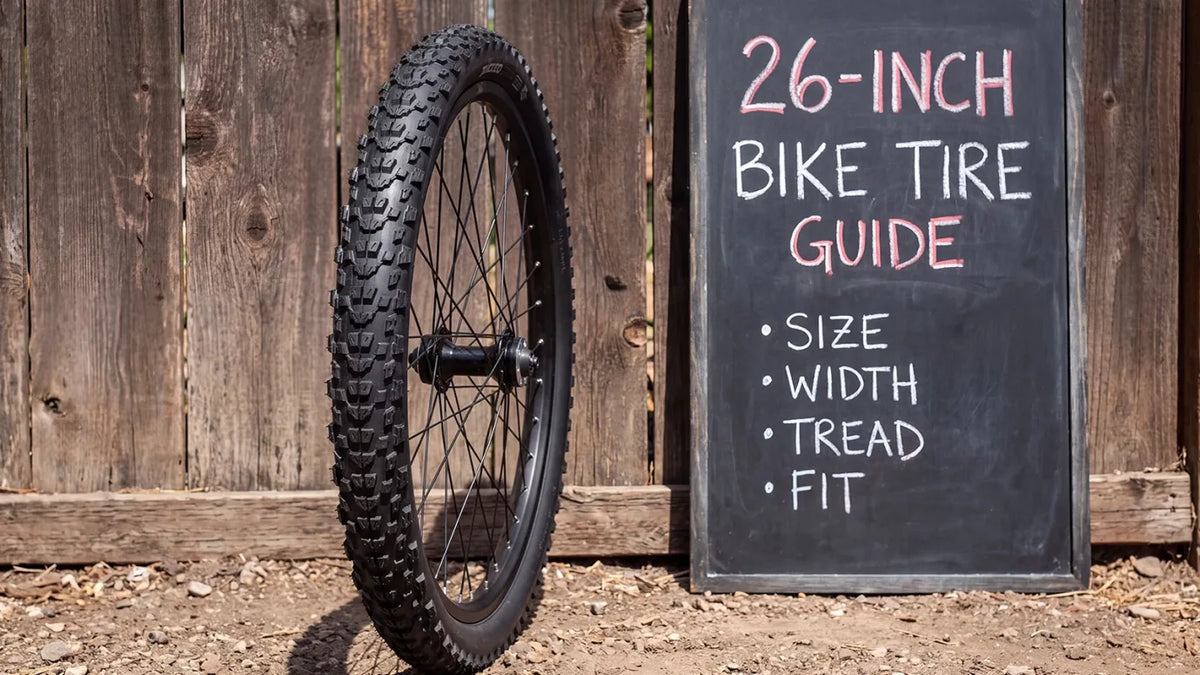
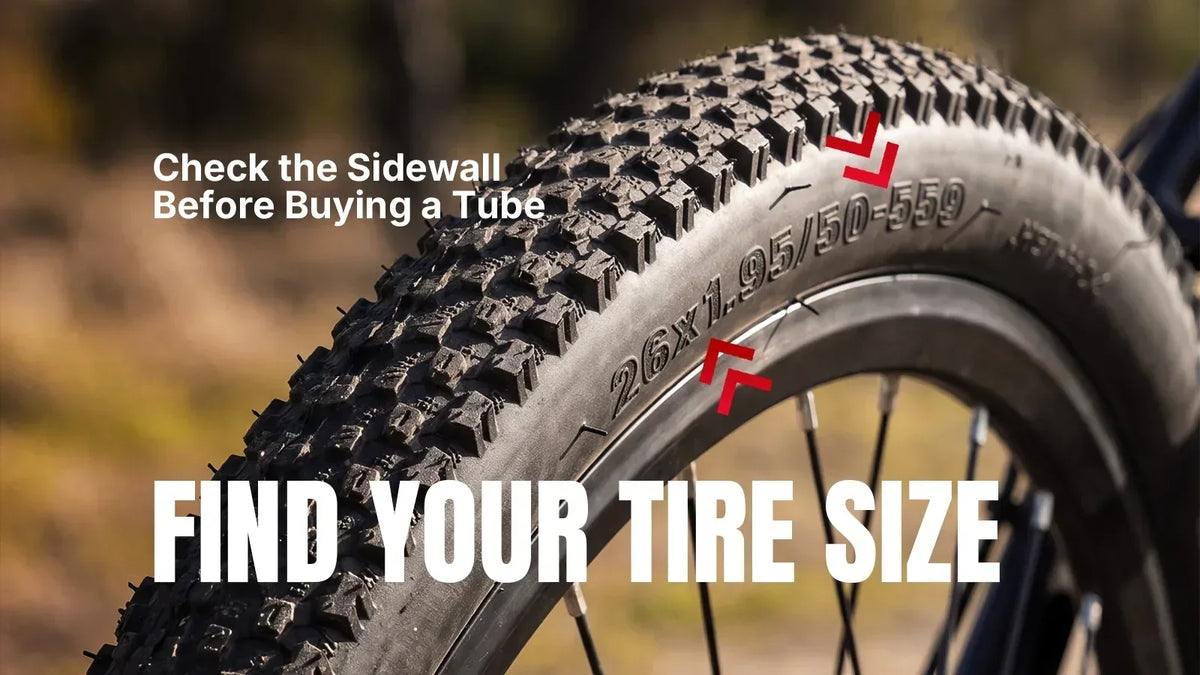
A 26 inch label alone does not confirm tube fit. Read the full sidewall marking, especially the ETRTO number if one is present. The tube must be designed for the same wheel diameter as the tire, while its width range must cover the tire width.
What Pump or Adapter Do You Need?

You need a pump head that fits your valve and seals firmly during inflation.
Many floor pumps use a dual head or universal head that supports Presta and Schrader valves. Compact pumps vary, so test yours before taking it on a long ride.
Use the setup that matches your valve:
- Presta valve with a Presta pump head: Remove the valve cap, loosen the small top nut to open the valve, attach the pump head securely, and inflate. After inflation, tighten the small nut by hand.
- Schrader valve with a Schrader pump head: Attach the head and inflate.
- Presta valve with a Schrader-only pump: Fit a Presta-to-Schrader adapter after opening the top nut.
- Dual-compatible pump: Select or connect the correct side according to the pump instructions.
Push the pump head fully onto the valve before locking it. If air is hissing around the connection, check that the pump head is fully seated and securely locked onto the valve.
Test your travel pump at home with the same valve type used on your bike. A pump can look compatible yet feel loose on a particular valve stem. Check the fit before you need it during a flat.
A compact hand pump is convenient for roadside repairs, while a CO₂ inflator can inflate a tire quickly. Make sure the inflator head is compatible with your valve type.
Can You Change Valve Types?
Yes, but most riders can keep the valve type that already matches their rim. For standard butyl inner tubes, changing the valve type is not a typical repair. If you switch wheelsets or need a different valve type, choose a replacement tube with a valve that matches the rim.
Check your full setup before changing anything. Your rim, pump, pressure gauge, spare tube, and travel kit should all work with the same valve type. Presta valves are suitable for rims drilled with smaller valve holes, while deep-section rims may require a longer valve stem regardless of valve type. A Schrader setup can suit riders who already use car-style pump fittings.
Avoid changing a rim hole only to use an existing tube. Choose the tube and valve that fit the wheel you already have.
Choose the Valve That Fits Your Rim and Pump

Choose the valve that fits your rim hole and pump. Match the tube’s listed diameter and width range to your tire sidewall, then confirm valve type and length. For replacement options, compare JUCEO bike inner tube options after confirming your tire size and valve type.
FAQ about Presta and Schrader Valves
Q1: Can You Ride Without a Valve Cap?
Yes. A bike can still hold air without a valve cap because the valve core controls airflow. A cap helps keep dirt, water, and grit away from the valve. Replace a missing cap when possible, especially if the bike is exposed to dirt or moisture.
Q2: Why Does a Valve Stem Tear Near the Tube?
A tear near the valve often comes from tube movement inside the tire. Low pressure, poor tube alignment, or a crooked valve can pull on the rubber around the valve base. A damaged or improperly sized rim valve hole can also contribute to damage around the valve area. Check pressure before rides and keep the valve straight during tube installation.
Q3: Can You Replace a Damaged Valve Core?
It depends. Schrader cores are usually removable with a valve-core tool. Some Presta valves also use removable cores,but not all Presta valve cores are removable. Check the valve design before trying to remove it. Replace the full tube if the rubber around the valve stem is torn.
Q4: Should You Tighten a Presta Valve Nut Fully?
No. Tighten it by hand, but do not overtighten it. The small nut at the tip opens and closes the Presta valve and should be snug after inflation. If the tube has a separate locking nut near the rim, it helps hold the valve stem in position during installation. Tighten these nuts by hand only; using tools can damage the valve or threads.
Q5: How Should You Store Tubes Without Damaging the Valve?
Store spare tubes in a cool, dry, dark place. Keep them away from direct sunlight, high heat, oil, fuel, solvents, sharp tools, and heavy objects. Fold the tube loosely and protect the valve with a cap.
Note: Woods/Dunlop valves are another bicycle valve type found in some markets, but this guide focuses on the two valve types most commonly encountered by riders in the U.S.: Presta and Schrader.


Leave a comment
This site is protected by hCaptcha and the hCaptcha Privacy Policy and Terms of Service apply.