

You need a bike inner tube whose manufacturer-approved compatibility range includes your tire’s full printed size. The valve type must fit the rim hole, and the valve stem needs enough length for your rim and pump.
Use the tire sidewall and the tube manufacturer’s approved range together before ordering.
Where Can You Find the Tire Size?
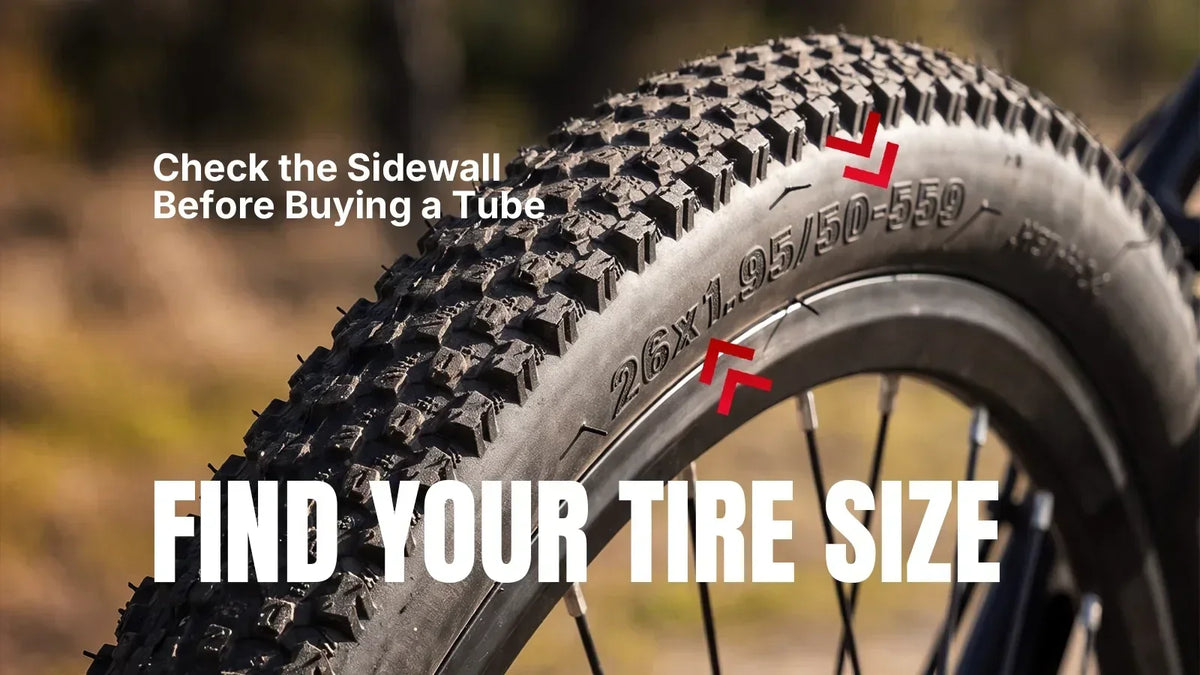
You can find the tire size on the tire sidewall. Look near the rim edge, usually beside the brand name or pressure information.
You may see markings such as:
- 26x1.95
- 26x2.125
- 50-559
- 54-559
- 700x35C
- 37-622
Take a clear photo of the sidewall before shopping. A photo helps when the numbers are worn, hard to read, or printed in more than one sizing format.
Use the tire marking as the main reference. A bike frame label, an old receipt, or a store category can be too broad for tube selection.
Look for every number on the tire, not only the large inch label. The full marking gives you the best chance of matching the tube correctly.
Match the Tube's Approved Size Range to the Tire
Check whether the tire’s full size is included in the inner tube manufacturer’s approved compatibility range.
ETRTO identifies a tire’s nominal width and bead-seat diameter, or BSD. The tire and rim need compatible BSD values. Inner tubes are flexible, so a single tube may cover a range of tire widths. Always rely on the tube manufacturer’s stated compatibility range and confirm that your tire’s full printed size is included. Do not assume that a tube will fit a different wheel diameter or tire family unless the manufacturer specifically lists that compatibility.
Use the complete tire marking when comparing it with the tube manufacturer’s approved range. Do not rely on the second ETRTO number alone.
| Tire Marking | What to Check on the Tube |
|---|---|
| 50-559 | The manufacturer lists 50-559 or an approved range that includes it |
| 54-559 | The manufacturer lists 54-559 or an approved range that includes it |
| 26 x 1.95 | The manufacturer lists that size or an approved compatible range |
| 26 x 2.125 | The manufacturer lists that size or an approved compatible range |
Do not assume every 26 inch tire uses the same diameter. Older 26 inch tire standards can use different bead-seat diameters. Check the full sidewall marking before purchase.

Using an inner tube outside the manufacturer’s approved size range can lead to overstretching or folding and may reduce installation reliability.
Width Comes as a Compatible Range
Inner tube compatibility is usually expressed as a range of tire widths for a specific wheel size. For example, a tube may be listed as 26 × 1.75–2.125. Always check that both your wheel size and tire width fall within the manufacturer’s approved range.
Check both details before ordering: the tube’s listed range needs to include your tire’s full size, including diameter and width.
A narrow tube can overstretch inside a wide tire. A tube that is far too wide can fold or bunch during installation. Use the tube maker’s approved range instead of judging fit from the folded tube in the box.
Mounted tire width can vary with rim width, pressure, casing, and tread. Use the printed tire marking and the tube’s listed compatibility range as your purchase reference.
Keep the package until installation is complete. It gives you the size and valve details needed for future replacements.
How Do You Read Inch and ETRTO Tire Sizes?

Inch labels and ETRTO labels describe tire size in different ways.
An inch label, such as 26 × 1.95, is a traditional tire size designation that describes a tire family and nominal width. It should not be used alone to confirm exact rim compatibility. An ETRTO label, such as 50-559, gives nominal width and bead-seat diameter in millimeters.
Read ETRTO like this:
- First number: nominal tire width
- Second number: bead-seat diameter
- Example: 50-559
The two formats can appear together on one tire sidewall. ETRTO identifies nominal tire width and bead-seat diameter, while the tube manufacturer’s approved compatibility range determines which inner tube sizes are suitable.
Do not convert an inch size into ETRTO through calculation alone. Use the actual marking printed on the tire whenever possible.
Which Valve Fits Your Rim?

The valve needs to fit the rim hole.
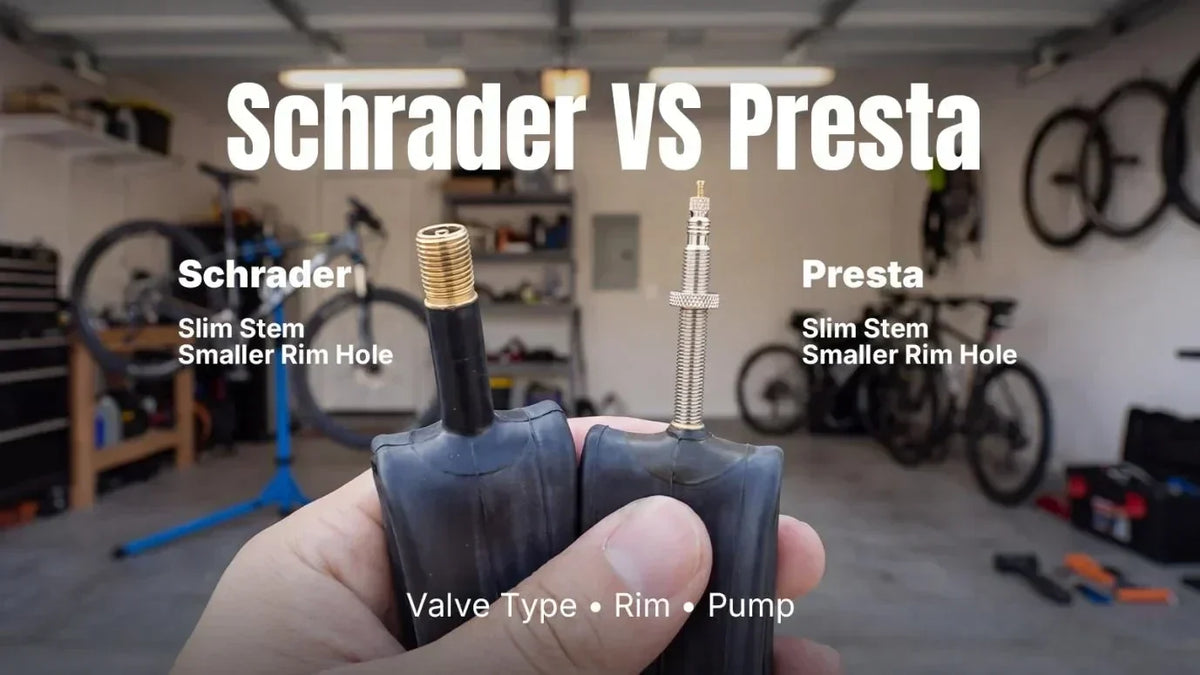
A Presta valve uses a narrow stem and a smaller rim hole. A Schrader valve uses a wider stem and a larger rim hole. Look at the valve already in your wheel before ordering a replacement tube.
Check valve length too. A deep-section rim may require a longer valve stem so the pump head can attach securely and the valve remains accessible. A valve stem that is too short may leave too little exposed length for smooth inflation.
Use this quick valve check:
- Identify Presta or Schrader.
- Check the rim-hole size.
- Measure the exposed valve stem.
- Confirm that your pump fits.
- Pack an adapter if your travel pump needs one.
A Presta tube can fit some Schrader-drilled rims with an adapter sleeve. A Schrader tube usually cannot fit a standard Presta rim hole.
Match Tire Size, Tube Range, and Valve Before Buying

Choose an inner tube whose manufacturer-approved compatibility range includes your tire’s full printed size. Then confirm that the valve type fits the rim hole and that the valve stem is long enough for your rim and pump. Check the tire, rim tape, and rim bed for sharp debris before installation. For replacement options, check JUCEO bike inner tube options after confirming your tire size and valve requirements.
FAQ about Inner Tube Size
Q1: Can Front and Rear Tires Use Different Inner Tubes?
Yes. Match each wheel independently. If the front and rear tires have different sizes, choose inner tubes whose manufacturer-approved ranges cover the tire fitted to each wheel. Match the valve type and valve length to the rim on that wheel.
Q2: Can You Use an Inner Tube in a Tubeless Ready Tire?
Yes. In many cases, a tubeless-ready tire can be used with an inner tube if the tire and rim are compatible with that setup. Remove the tubeless valve before installing the tube. Inspect the tire and rim for sharp debris or damage, and clean away excess sealant if necessary to help prevent installation problems. Follow the tire and rim manufacturers’ instructions for your specific components.
Q3: How Long Can You Store a Folded Spare Tube?
There is no single storage life that applies to every inner tube. Store spare tubes in their original packaging in a cool, dry, dark place away from heat, sunlight, ozone sources, oils, fuels, and solvents. Inspect the tube and valve before use, especially after long-term storage.
Q4: Should You Replace an Old Tube After Changing the Tire?
Replace the tube if it has cracks, stretched sections, damaged rubber near the valve, repeated repairs, aging patches, or other signs of material wear. Patch count alone does not decide whether a tube needs replacement. A clean tube in good shape can work with a new tire if the size range matches.
Q5: Can Heat Damage a Spare Inner Tube?
Yes. Heat and direct sunlight can age rubber faster. Avoid storing spare inner tubes in a hot car, near a heater, on a sunny windowsill, or beside chemicals such as fuel and solvents.


Leave a comment
This site is protected by hCaptcha and the hCaptcha Privacy Policy and Terms of Service apply.