

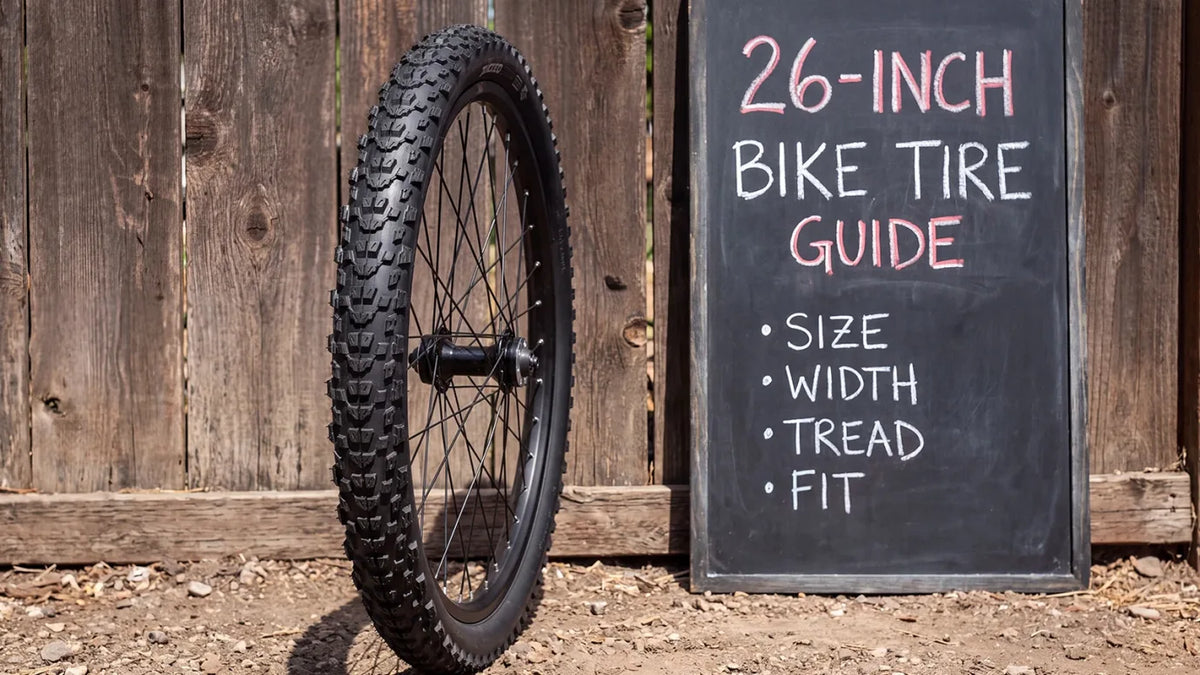
Choose 26 inch bike tires after matching the rim diameter, tire width, and tread to your bike and usual routes. Check the sidewall on your current tire before you shop.
Which 26 Inch Standard Is on Your Wheel?

Read the full sidewall code because “26 inch” can refer to several rim diameters.
| Tire Label | ISO Bead Seat Diameter | Common Use |
|---|---|---|
| 26×1.95 | 559 mm | Mountain bikes and hybrids |
| 26×1 3/8 | 590 mm | Classic comfort bikes |
| 26×1 1/2 | 584 mm | Older touring bikes |
| 26×1 3/4(Schwinn S-7) | 571 mm | Older road bikes |
Some older 26 inch tire designations, including Schwinn-specific sizes, use different bead seat diameters. Always match the ISO/ETRTO size printed on your existing tire.
These are common examples, not universal conversions. Some fractional 26 inch labels have been used for more than one bead seat diameter. Always confirm the ISO/ETRTO number printed on the tire sidewall.
Look for a code such as 50-559. The first number indicates the nominal tire width in millimeters, while the second number indicates the bead seat diameter (BSD) in millimeters.

The ISO tire sizing system gives you a clear way to compare tire labels. Match the final ISO number on the new tire to the final ISO number on your current tire.
Choose a Tire Width That Fits Your Rim and Frame

Use a tire width that fits your rim and leaves space around the frame, fork, fenders, and brakes.
Use Your Current Tire as a Baseline
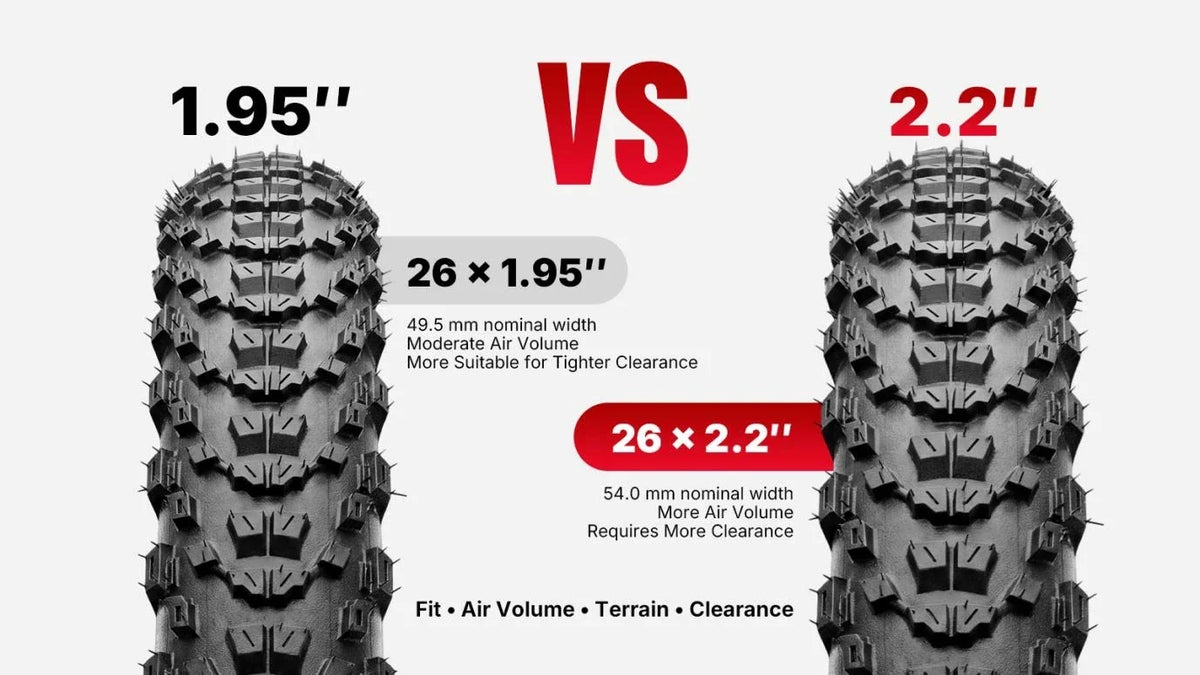
A 26×1.95 tire can be a practical choice for everyday riding, paved paths, and light trails, while a 26×2.2 tire provides greater air volume and may offer additional comfort and traction on gravel, dirt, and rougher surfaces.
On smooth pavement, a narrower tire with a road-oriented tread can feel more responsive, while a wider tire can provide greater air volume and comfort on uneven surfaces.
Check Rim Width Compatibility
When changing tire width, check the rim manufacturer's recommended tire-width range. A tire can have the correct bead seat diameter but still be too wide or too narrow for the rim.
Check Frame and Fender Clearance
Measure the open space around your current tire near the fork crown, chainstays, seatstays, fenders, and brake arms. Your new tire needs room for wheel flex, dirt, and small stones.
Check clearance before moving to a wider 26 inch bicycle tires setup. A wider tire needs space around its full profile, not only at the top of the wheel.
Match the Tread Pattern to Where You Ride
Choose a tread pattern that matches the surface you ride most often.
- Smooth tread suits streets, bike lanes, and paved paths. It rolls easily on firm surfaces.
- Semi-slick tread suits commuting, park paths, and light gravel. A smoother center helps with rolling, while side tread supports cornering.
- Knobby tread suits dirt, loose gravel, roots, and light mud. Larger knobs add traction on uneven ground.
Choose Added Puncture Protection for Rough Routes
Choose a tire with a protective layer when your routes often include glass, thorns, sharp gravel, or rough trails. A mountain bike tire and tube set with added puncture protection can suit trail riding and daily routes with frequent debris.
Choose Between Folding and Wire Beads
Choose a folding bead if portability and compact storage are priorities. A wire bead can be a practical option when the tire will remain installed and compact storage is less important.
Bead type affects storage and transport. Tire size, frame clearance, and tread pattern still determine fit and riding use.
Do You Need Tires Only or a Complete Replacement Set?
Buy tires only for a single worn tread, and choose a complete set for a full wheel refresh.
-
Choose Tires Only for a Single Replacement
A tire-only purchase works well when one tire has worn down sooner than the other and your existing tube remains in good condition. -
Choose a Set for a Full Refresh
A complete set works well when you want matching tires, new tubes, and tire levers in one package. -
Match the Valve Type
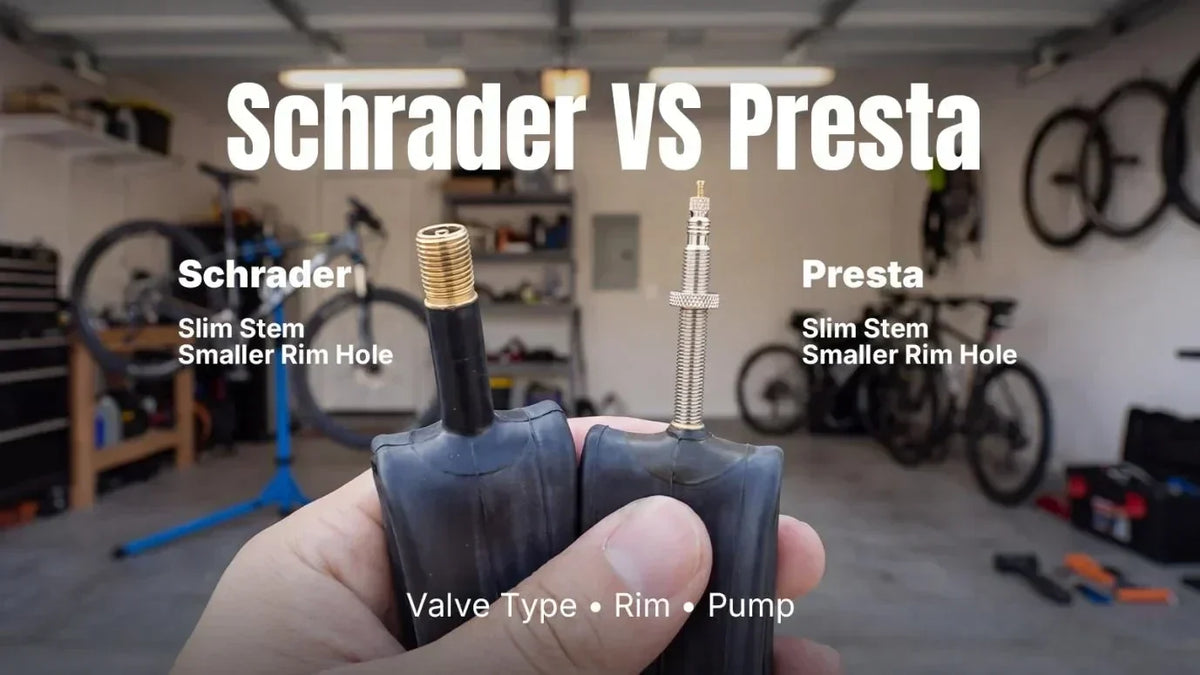
Schrader valves are common on mountain bikes, hybrids, and cruisers. Presta valves are common on slimmer rims. Check the valve hole in your wheel before ordering a tube. -
Prepare Basic Tools
Keep tire levers, a compatible pump, a pressure gauge, and a spare tube in your repair kit. Those items cover most routine tire changes and roadside flats.
After confirming your tire size and valve type, you can shop 26 inch mountain bike tires and replacement sets.
Check Your Setup After Installation
Check the bead, pressure, wheel clearance, and brakes before riding.
- Inspect the bead line. The molded line near the rim should sit at a similar distance from the rim edge around the full wheel.
- Inflate in stages. Add air gradually and stay within the PSI range printed on the tire sidewall.
- Spin the wheel. Look for rubbing near the frame, fork, fenders, brake arms, chain guard, or accessories.
- Test the brakes. Squeeze each brake lever and confirm that the wheel stops cleanly.
Before your first ride, check the bead, tire pressure, wheel clearance, and brakes one more time. That quick check can catch fit or installation issues early.
Match a 26 Inch Setup With Less Guesswork
Write down four details before placing your order: the final ISO number, tire width, valve style, and main riding surface. Use those details to choose the correct tire, tube, tread, and package format.
FAQ about 26 Inch Bike Tires
Q1: Can a 26 Inch Tire Fit a 27.5 Inch Wheel?
No. A common 27.5 inch wheel uses a 584 mm bead seat diameter, while a common 26 inch mountain wheel uses 559 mm. The tire bead and rim diameter must match exactly. A wheel swap also needs compatible brakes, axle spacing, frame clearance, and a tube that fits the new wheel size.
Q2: Do I Need a New Inner Tube When I Replace a 26 Inch Tire?
Not always. You can reuse an undamaged tube if its marked size range covers the new tire width and its valve matches the rim. Replace it if it has repeated punctures, valve damage, brittle rubber, or several aging patches.
Q3: Can I Use a 26 Inch Tire on a Cruiser?
Yes. Many cruisers use 26 inch wheels. Check fender space, chain guard clearance, and brake clearance before ordering because cruiser tires often have a wider profile. A smooth or lightly grooved tread suits paved paths, and relaxed neighborhood rides.
Q4: Why Is My New 26 Inch Tire Hard to Mount?
A tight tire often has beads sitting outside the rim’s center channel. Push both beads into that channel as you work around the wheel, then finish near the valve. Inflate the tube just enough to give it shape before installation.


Leave a comment
This site is protected by hCaptcha and the hCaptcha Privacy Policy and Terms of Service apply.